
Leaky Gut
Original price was: ₹6,035.₹5,273Current price is: ₹5,273.
MRP (incl. of all taxes)
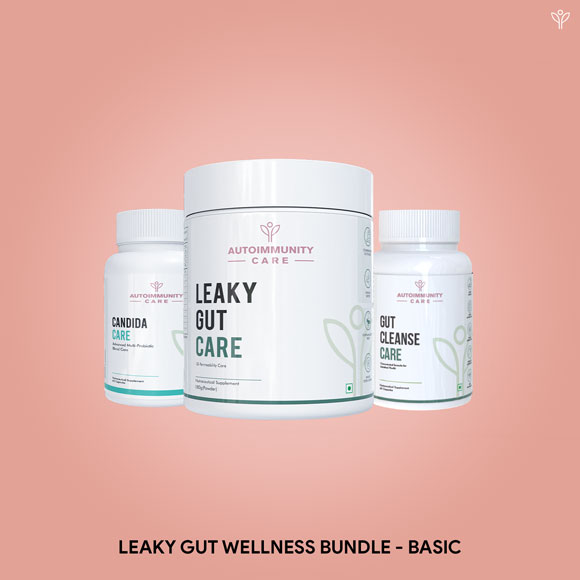
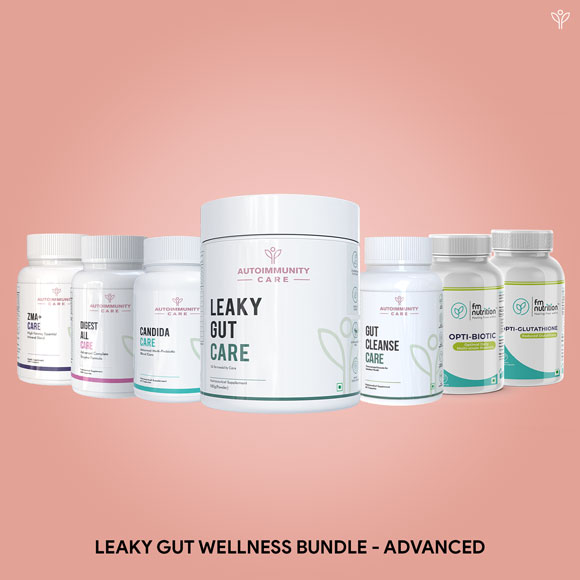
AIC’s Leaky Gut Wellness bundle is a comprehensive bundle that combines the power of leaky gut care, gut cleanse care, and S. Boulardii care to target the root causes of gut permeability. It eliminates pathogens, reduces inflammation, REPAIRS damaged gut lining, ELIMINATE toxins, and RESTORE a healthy gut microbiome.



Understanding Leaky Gut
Leaky gut is a condition in which the small intestine becomes overly permeable, allowing undigested food particles, toxins, and microbes to enter the bloodstream, leading to various health issues including autoimmune diseases.
Normally the intestines do a good job of filtering out harmful substances and only allowing necessary nutrients to pass through (Assimakopoulos et al., 2018). However, when the intestinal barrier is compromised through inflammatory triggers, it can result in a range of symptoms and chronic health problems.
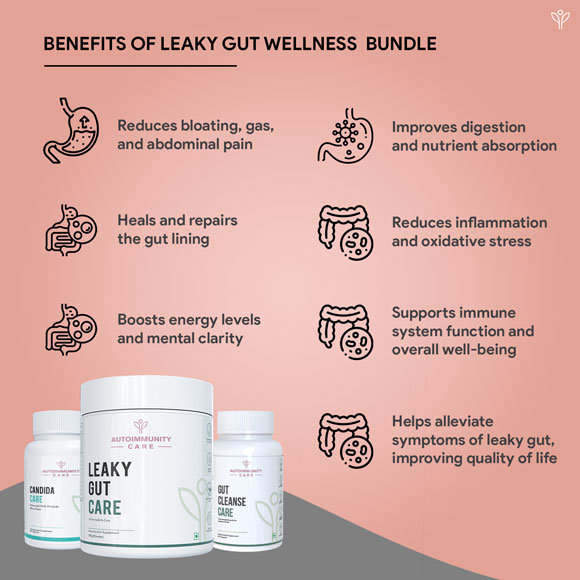
What We Have In Leaky Gut
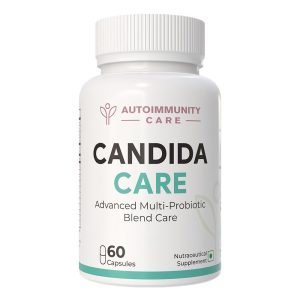
Autoimmunity Care Candida Care Supplement
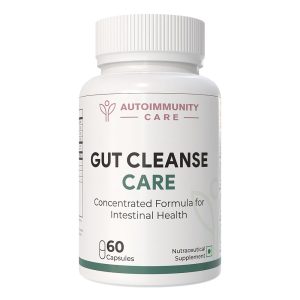
Autoimmunity Care GUT Cleanse Care
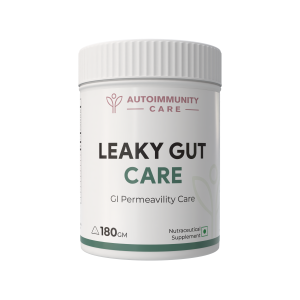
Autoimmunity Care Leaky Gut Care Powder
Understanding Leaky Gut
Leaky gut is a condition in which the small intestine becomes overly permeable, allowing undigested food particles, toxins, and microbes to enter the bloodstream, leading to various health issues including autoimmune diseases.
Normally the intestines do a good job of filtering out harmful substances and only allowing necessary nutrients to pass through (Assimakopoulos et al., 2018). However, when the intestinal barrier is compromised through inflammatory triggers, it can result in a range of symptoms and chronic health problems.
How does Leaky Gut occur?
The intestinal barrier is made up of cells held together by tight junctions. Tight junctions are protein complexes that act like seals between two cells and control what can pass through the intestinal lining (Bischoff et al., 2014).
Basically, chronic inflammation leads to breakdown of these tight junctions, causing the intestinal barrier to become permeable or "leaky" (Dey, 2020). Factors like poor diet, alcohol, stress, certain medications like NSAIDs and antibiotics, intestinal dysbiosis & infections, mould exposure & environmental toxicity, insulin resistance, hyperglycaemia, dyslipidaemia and autoimmune conditions lead to microbial dysbiosis and gut barrier dysfunction.
Signs and Symptoms
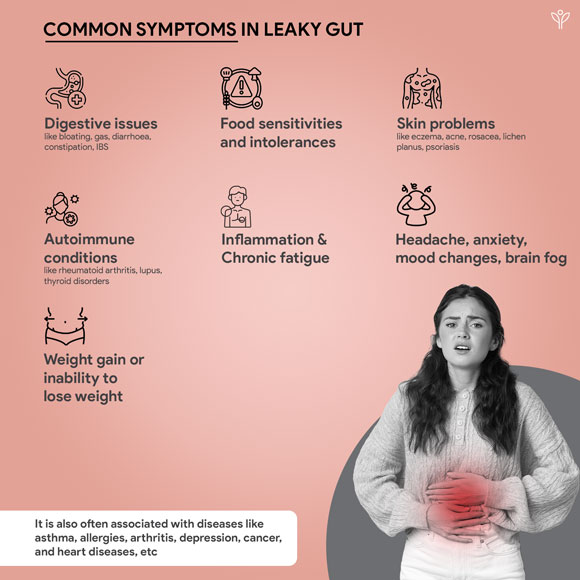
A leaky gut can manifest in a variety of ways:
• Digestive issues like bloating, gas, diarrhoea, constipation, IBS
• Food sensitivities and intolerances
• Skin problems like eczema, acne, rosacea, lichen planus, psoriasis
• Autoimmune conditions like rheumatoid arthritis, lupus, thyroid disorders
• Chronic fatigue
• Headache, anxiety, mood changes, brain fog
• Weight gain or inability to lose weight
It is often associated with diseases like asthma, allergies, arthritis, depression, cancer, and heart disease (Bischoff et al., 2014) (Dey, 2020) (Mbuya & Humphrey, 2015) (Massier et al., 2021).
Diagnosis of Leaky Gut
There is no single definitive test for leaky gut. Measurement of zonulin levels, a protein that regulates intestinal permeability, can provide some insight. Lactulose-mannitol tests may also be used, which measure the absorption of these two sugars to assess intestinal permeability. Elimination diets, food sensitivity testing, and checking for markers of inflammation can also help diagnose leaky gut.
It is important to rule out other potential underlying conditions through a root cause analysis
How can it be treated?
The conventional treatment for GERD primarily focuses on medications like antacids, proton pump inhibitors (PPIs) and H2 antagonists to suppress stomach acid production, combined with lifestyle modifications. However, prolonged use of these medications can cause side effects such as nutrient deficiencies, an increased risk of infections (including Clostridium difficile and pneumonia), and bone loss (Kim et al., 2022). Additionally, if GERD symptoms are caused by hypochlorhydria (low stomach acid), further acid suppression can worsen the condition over time.
Diet - Avoiding trigger foods like fatty, fried, ultra-processed, sugary, spicy, acidic, and caffeinated items. Avoid eating 2-3 hours before bedtime. Focus on an anti-inflammatory diet with more fibers, probiotics and enzymes.
Lifestyle changes - Weight loss, smoking cessation, elevation of the head of the bed while lying down, 10-20 minutes of walking post meals, inculcating relaxation and stress management techniques.
Certain causes of GERD like Hiatal hernia may require more advanced interventions like endoscopic or surgical correction. Surgical procedures like fundoplication can help strengthen the lower esophageal sphincter.
A thorough root cause analysis to identify the underlying factors driving GERD is crucial and the use of a well-planned treatment approach, including the use of supplements maybe beneficial.
Supplements known to support gut barrier function include
Zinc carnosine - helps repair gut lining (Bischoff et al., 2014)
Berberine - anti-inflammatory and antimicrobial
Curcumin - powerful anti-inflammatory
Digestive enzymes - replacing enzymes like HCL, pepsin, pancreatic enzymes etc. to improve digestion
Vitamin A & D - regulates intestinal permeability
Omega 3 fatty acids - reduce inflammation
L- glutamine - helps repair intestinal cells
Glutathione - antioxidant that protects the gut lining
Herbs like Aloe Vera, Slippery Elm Bark, Marshmallow Extract, Chamomile Extract, Okra Extract also provide gut healing benefits.
In Summarisation
By addressing the root causes and implementing natural, holistic treatments, many people have found success in healing their leaky gut and restoring overall gut and whole-body health (Fock & Rg, 2023) (Dey, 2020) (Bischoff et al., 2014) (Camilleri, 2019).
Reference
Assimakopoulos, S. F., Triantos, C., Maroulis, I., & Gogos, C. (2018). The Role of the Gut Barrier Function in Health and Disease. In Gastroenterology Research (Vol. 11, Issue 4, p. 261).
Bischoff, S. C., Barbara, G., Buurman, W. A., Ockhuizen, T., Schulzke, J., Sérino, M., Tilg, H., Watson, A. J. M., & Wells, J. M. (2014). Intestinal permeability – a new target for disease prevention and therapy [Review of Intestinal permeability – a new target for disease prevention and therapy]. BMC Gastroenterology, 14(1). BioMed Central.
Camilleri, M. (2019). Leaky gut: mechanisms, measurement and clinical implications in humans [Review of Leaky gut: mechanisms, measurement and clinical implications in humans]. Gut, 68(8), 1516. BMJ.
Dey, P. (2020). Targeting gut barrier dysfunction with phytotherapies: Effective strategy against chronic diseases [Review of Targeting gut barrier dysfunction with phytotherapies: Effective strategy against chronic diseases]. Pharmacological Research, 161, 105135. Elsevier BV.
Fock, E., & Rg, P. (2023). Mechanisms of Blood–Brain Barrier Protection by Microbiota-Derived Short-Chain Fatty Acids [Review of Mechanisms of Blood–Brain Barrier Protection by Microbiota-Derived Short-Chain Fatty Acids]. Cells, 12(4), 657. Multidisciplinary Digital Publishing Institute.
Massier, L., Blüher, M., Kovács, P., & Chakaroun, R. (2021). Impaired Intestinal Barrier and Tissue Bacteria: Pathomechanisms for Metabolic Diseases [Review of Impaired Intestinal Barrier and Tissue Bacteria: Pathomechanisms for Metabolic Diseases]. Frontiers in Endocrinology, 12. Frontiers Media.
Mbuya, M. N. N., & Humphrey, J. H. (2015). Preventing environmental enteric dysfunction through improved water, sanitation and hygiene: an opportunity for stunting reduction in developing countries [Review of Preventing environmental enteric dysfunction through improved water, sanitation and hygiene: an opportunity for stunting reduction in developing countries]. Maternal and Child Nutrition, 12, 106. Wiley.